The two dominant looks in this genre are sweets and fruit. Both use the same swap-or-tap mechanic, both fill a grid with six or seven colours, and both hand you a booster when you fail a level three times. Set them side by side and the honest answer to "is fruit different?" is: mostly no, with two genuine exceptions.
Exception one: silhouettes
Fruit is a gift to a designer because real fruit already has distinct shapes. A strawberry, a lemon, a bunch of grapes and a watermelon slice are different objects, not the same object in four colours. Candy boards have to work harder — a round red lolly and a round orange lolly differ only in hue, so the good ones invent shapes: wrapped, striped, twisted, jelly.
This matters most in bright light. Outdoors, colour saturation on a phone screen collapses, and a board that relies on hue alone becomes genuinely hard to read. Fruit boards survive the walk to the bus stop better. That is not a stylistic preference; it is contrast.
Exception two: the palette is warmer, and that changes the fatigue
Candy games trend towards pinks, purples and cool blues on a bright white background. Fruit games trend towards oranges, reds and greens on a warmer ground. After forty minutes in a dark room, the warmer palette is noticeably easier on the eyes — not because of anything mystical about blue light, but because the whole screen is less bright and less contrasty.
If you play mainly at night, this is a real reason to prefer one over the other.
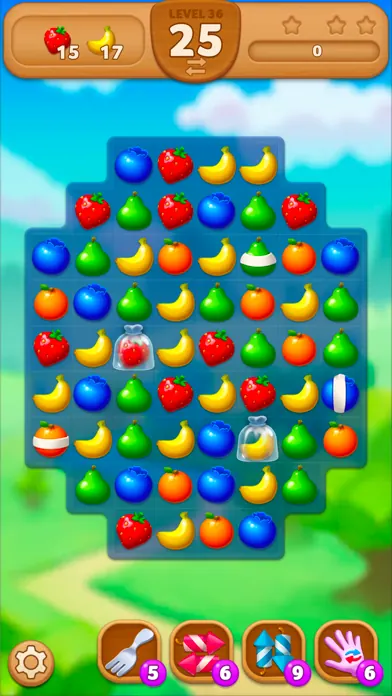
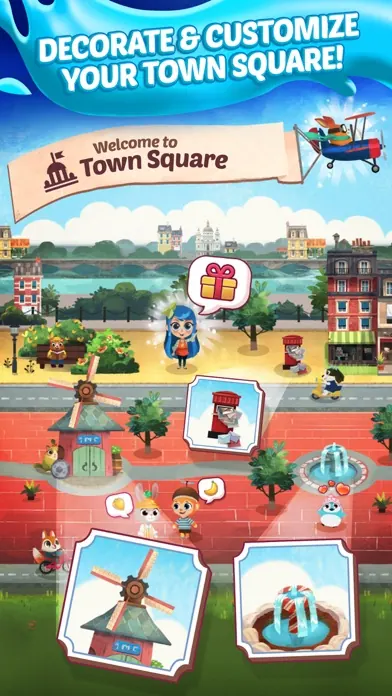
Screenshots from the official Australian store listings for Fruits Mania and Juice Jam. All rights belong to their publishers.
What does not differ at all
- The economy. Lives, timers, boosters and bundles work identically whether the pieces are cherries or caramels.
- The difficulty shape. A run of easy stages, then a wall, then a shop. Universal across the genre.
- The event calendar. Weekend tournaments, seasonal maps, limited-time collections. Same structure, different sprites.
- Session length. Determined by the goal type — clear, collect, or reach a score — not by the theme.
Where the theme does shape the game
Occasionally the theme drives a mechanic instead of decorating one. Juice splashing across the board, jam spreading over cleared squares, a fruit that must be walked to the bottom of the grid — these come from the fruit theme rather than being bolted onto it, and they play differently as a result. When a fruit game does this, it stops being a reskin. When it does not, it is a reskin, and there is nothing wrong with that either.
A practical way to choose
Ignore the theme. Look at the screenshots and ask three questions: do the pieces differ in shape, how wide is the grid, and is the goal counter visible without hunting for it. A fruit game that fails all three is worse than a candy game that passes them, and the reverse is equally true.